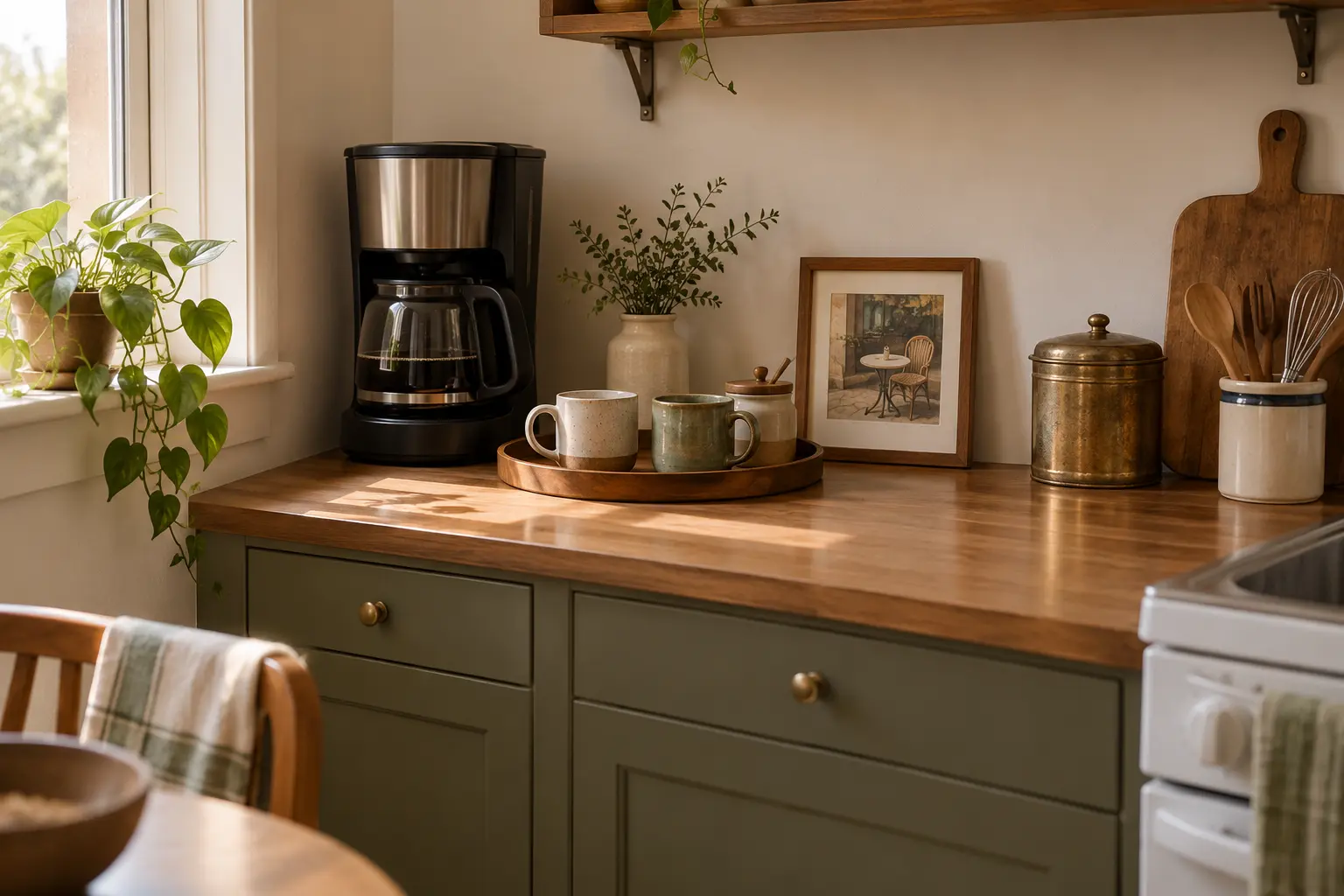
A vintage coffee corner does not need an antique cabinet, a wall of signs or a matching collection bought all at once. In a small kitchen, the feeling can come from a few consistent materials, one useful surface and objects that look collected rather than crowded. Your current coffee maker can stay.
These vintage coffee corner ideas start with measurements and daily habits. Choose one compact base, hide most packaging and let a small number of characterful pieces carry the look.
Disclosure: This post may contain affiliate links. If you buy through one of these links, we may earn a commission at no extra cost to you.
1. Choose one compact base
Start with the place that will hold the coffee maker. Use existing counter space when it leaves enough room for normal kitchen work. Consider a slim rolling cart when the counter is full but a narrow section of floor is available. A cabinet niche may work when it has suitable ventilation, power access and room to operate the appliance safely.
| Base | Best when | Check before committing |
|---|---|---|
| Counter edge | You already have a stable surface near a suitable outlet | Food-prep space, cabinet doors, water access and mug landing room |
| Slim rolling cart | Floor space is available but built-in counters are crowded | Full width and depth, wheels, load guidance, walkway and cord reach |
| Cabinet niche | You want the setup visually contained | Appliance instructions, ventilation, shelf strength, door movement and operating clearance |
Choose the base because it supports the machine, stays clear of the walkway and can be cleaned. A neutral modern base can disappear once the tray, mugs and colors tell a coherent story.
If a cart is the best fit, use How to Choose a Narrow Coffee Cart for a Small Space to compare measurements before buying.
2. Measure the corner while the machine is moving
A closed appliance footprint is only the beginning. Measure the width, depth and height of the available zone, then operate the machine as you normally would. Open the lid, remove the reservoir or carafe, reach the controls and pull out any drip tray or grounds basket.
Mark the proposed base with paper or removable tape. Keep nearby drawers and cabinet doors moving through their full path. Protect a separate landing area for a mug and spoon. A beautiful corner becomes frustrating when every drink requires moving the framed card, canister or lamp.
Check the outlet location and appliance instructions before positioning furniture. Do not stretch a cord across a walkway or route it tightly around a sharp edge simply to preserve the visual arrangement.
3. Pick one vintage material story
The fastest way to make a small display feel busy is to combine every version of vintage at once. Instead, choose one restrained material story that can work with items you already own.
Warm wood and cream ceramic create a quiet café feeling. Enamel, dark green and a small aged-metal accent feel more utilitarian. Rounded shapes and muted amber, olive or brown can suggest a mid-century corner without turning the room into a set.
Repeat only two or three cues. For example, use one wood tray, two ceramic mugs and a small metal tin. The coffee maker does not need to match them. Keeping the appliance modern and the decorative layer simple usually looks more believable than surrounding it with reproduction signs.
4. Let one tray create the boundary
A tray can make a few unrelated objects read as one intentional group. Place the daily coffee container, scoop or sugar jar inside it, or use it only for the two mugs and one small accessory. The tray should not cover the full surface.
Leave open space beside the machine for pouring and serving. If every item no longer fits inside the chosen boundary, decide what can move into a cabinet rather than replacing the tray with a larger one.
Wood, dark metal or a simple enamel finish can reinforce the vintage direction, but fit and cleanability matter more than age. Reuse a serving tray you own for a week before buying one specifically for the station.
5. Display a small working set of mugs
Two to four frequently used mugs are enough to create a collected look. Mix compatible shapes or glazes instead of forcing an identical set, but keep the color range limited so the small corner remains calm.
Store extra, seasonal and sentimental mugs away from the working surface. Rotate them when you want a change. This gives the display personality without turning it into permanent storage for the whole collection.
If mugs are already filling cabinets or the counter, solve that problem separately with Coffee Mug Storage Ideas for Small Kitchens. Do not hang heavy mugs from an unverified hook system just because an open display suits the style.
6. Hide modern packaging and backup supplies
Vintage styling works best when the visible layer is edited. Keep one working supply near the machine and place unopened coffee, extra filters and cleaning refills together in a nearby cabinet, pantry bin or lower cart shelf.
You do not need to decant everything. Original packaging may contain storage, preparation and date information worth keeping. Place a securely closed bag inside an existing basket or behind a cabinet door when the graphics feel visually loud.
An under-shelf basket can use empty cabinet space, but only after its exact dimensions, mounting opening, shelf thickness and door clearance are confirmed. Current listings for similar-looking baskets can differ, so the product name alone is not enough. Store light supplies rather than treating a general basket as a mug rack.
For more ways to use hidden and vertical space, see Coffee Bar Storage Ideas Without More Counter Space.
7. Add one café detail without creating a theme wall
A small framed card, handwritten menu or old postcard can make the corner feel personal. Keep it behind the working area where it will not be splashed, steamed or moved for every drink. Avoid readable claims about prices, ingredients or coffee quality that do not match what you actually serve.
8. Use warm light safely
Notice whether the corner already receives comfortable daylight or warm ambient kitchen light. If extra light would genuinely help, choose equipment intended for the location and follow its instructions.
Keep lighting, cords and switches away from water, hot surfaces and steam. Do not place a lamp where it reduces the appliance's operating clearance or uses the only landing space. A vintage-style bulb is not useful if the station becomes harder to clean or less safe to operate.
9. Keep the setup renter-friendly
A counter arrangement, freestanding cart, tray and leaning frame can create the full effect without drilling. Removable solutions still require care: confirm the surface instructions, load limits and lease rules before using adhesive hooks or strips.
Build the first version from objects that can move with you. If the corner later proves useful, you can decide whether a fixed element solves a real problem. Renter-Friendly Coffee Bar Ideas Without Drilling covers the wider no-drill setup.
10. Build a five-minute reset
The best vintage coffee corner should still return to order quickly. After brewing, empty grounds as directed, wipe the machine area, return the scoop or filters and leave the mug landing space open. Refill only the small working supply.
Dust can collect around frames, tins and decorative objects, so keep the visible group small enough to lift and clean. If resetting requires moving several pieces, remove one item for a week. A collected look depends on space between objects as much as the objects themselves.
Frequently asked questions
Can a modern coffee maker work in a vintage coffee corner?
Yes. Let the tray, mugs, frame and color palette provide the vintage feeling. A current machine can remain the practical center. Avoid covering, painting or modifying it in ways the manufacturer does not approve.
What colors make a coffee corner feel vintage?
Warm cream, medium or dark wood, muted olive, amber and espresso brown are flexible starting points. Choose two or three that suit the existing kitchen rather than importing a complete palette from a photo.
How can I create the look without drilling?
Use an existing counter, a stable freestanding cart, one tray, a safely leaning frame and a small mug set. Check lease rules and manufacturer guidance before using removable mounting products.
What should stay visible in a small coffee station?
Keep the appliance, one working coffee supply and the items used for the usual drink. Display only a few mugs or meaningful objects. Backups and occasional tools can stay in one nearby storage area.
Is a cart or counter better for a tiny kitchen?
Use the counter when it leaves enough food-preparation and serving space. Use a cart when a measured floor area is available and it will not narrow the walkway. Compare the setup in motion, not only its footprint.
Optional shopping guide
Products to compare
These options match the practical needs discussed above. Measure your space and review the current Amazon listing before deciding.
Paid links. As an Amazon Associate I earn from qualifying purchases.
Why it may fit
Yamazaki Home Tower Rolling Slim Storage Cart
A slim rolling option to compare when floor space matters. Confirm the listed dimensions and shelf clearance against your setup.
Prices and availability can change. Amazon’s current listing controls.
Final thought
A convincing vintage coffee corner is not a shopping list. It is one measured place where useful modern equipment, a few collected details and clear working space can coexist. Begin with the surface and routine you already have, add character with restraint and buy only the piece that solves a specific gap.