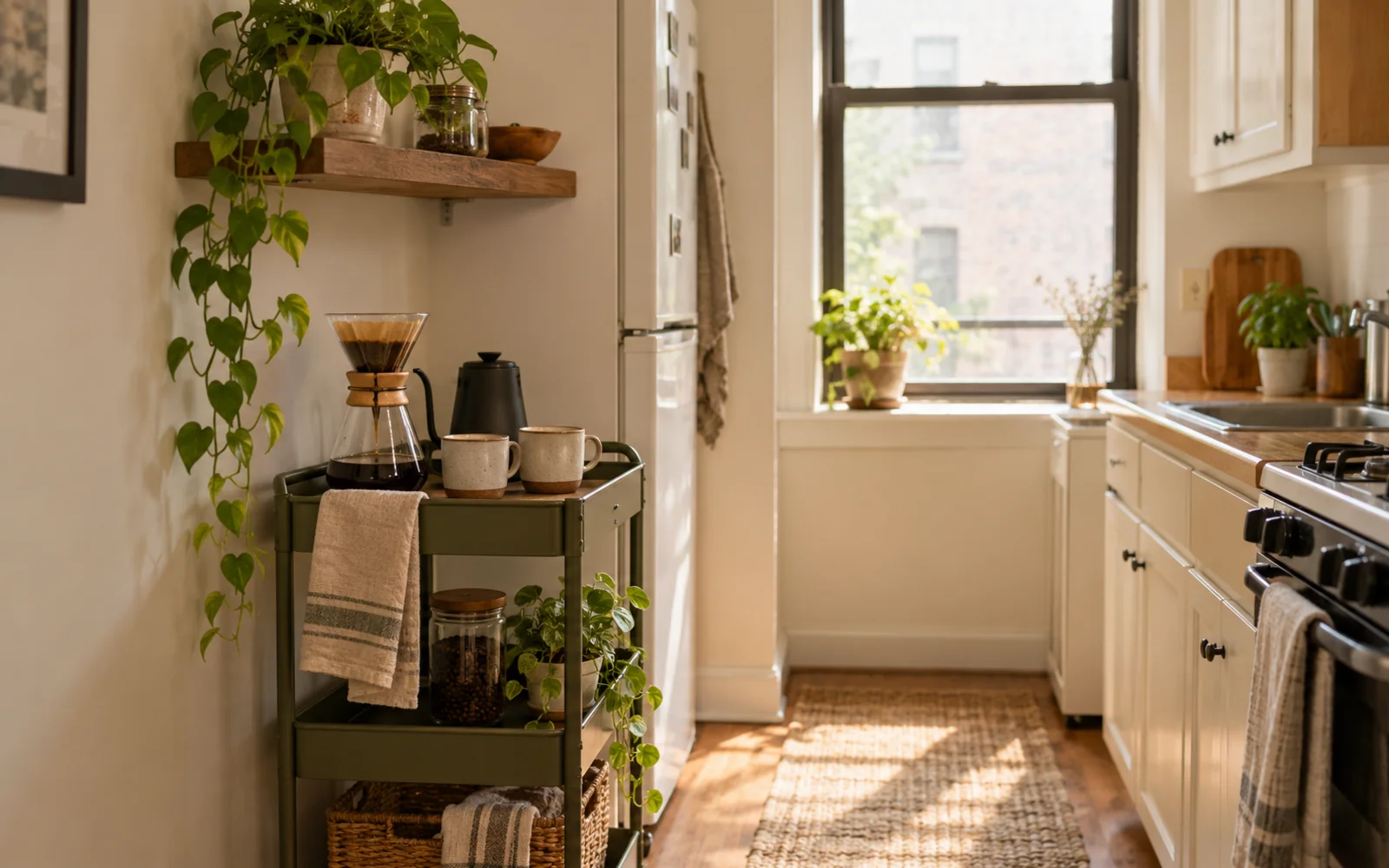
A narrow coffee cart can create a useful station when the kitchen counter is already full. The difficult part is not finding a cart that looks good in a product photo. It is finding one that fits the room, supports the equipment and still leaves enough space to move around it.
This guide focuses on the measurements and everyday details that matter before you choose a cart. The goal is a compact coffee station that is stable, easy to clean and sized for the routine you actually have.
Disclosure: This post may contain affiliate links. If you buy through one of these links, we may earn a commission at no extra cost to you.
1. Measure the available space first
Measure the width and depth of the open floor area, then check the nearest doors, drawers and walkways. Mark the proposed footprint with painter’s tape or pieces of paper so you can see how the cart will affect movement through the room.
Do not plan around the largest object that can technically fit. Leave room for hands, handles, wheels and any overhanging top. A cart that presses against a doorway or catches clothing will feel too large even when its listed dimensions match the wall.
2. Measure the coffee maker in use
The machine’s footprint is only the beginning. Measure the space required to open its lid, remove the water tank, add beans, reach controls and take out the drip tray. If steam or heat is released upward, follow the manufacturer’s clearance instructions.
Set the largest appliance on the top shelf only if the surface is stable and the cart is rated to support it. Keep the machine away from the edge and make sure the cord reaches a suitable outlet without crossing a walkway.
3. Choose the top size by function
A useful cart top should hold the main brewer and still leave a small landing area for a mug. If every inch is occupied by appliances, the cart may provide storage without providing a workable coffee station.
List the items that truly need to stay on top. For many routines, that means one brewer, one small container and one clear spot for serving. Mugs, filters and backup coffee can usually live below or nearby.
4. Decide whether wheels help
Wheels are useful when the cart must move for cleaning or when it occasionally serves another part of the room. They are less useful if the cart will remain in one permanent position and the wheels make the surface feel less stable.
If you choose wheels, look for locking casters and confirm whether the listed height includes them. Test that the locks are easy to reach. Follow the cart maker’s directions and avoid moving the cart while it holds hot drinks or an operating appliance.
5. Look at shelf height, not only shelf count
Three shelves are not automatically better than two. Check the clear height between shelves and compare it with the items you intend to store. Tall syrup bottles, an electric kettle or a large bag of coffee may not fit where the product image suggests.
Use lower shelves for heavier or less frequently handled supplies. Keep everyday items at a comfortable height and avoid stacking containers so high that they become awkward to lift.
6. Compare open and closed storage
Open shelves make supplies easy to see and reach, but they also show packaging and collect dust. A cart with a drawer or cabinet can make the station feel calmer, although doors and drawers need extra room to open.
Choose based on what you plan to store. Open shelves work well for a small basket, kettle or folded towel. Closed storage is helpful for backup filters, cleaning items and colorful packages.
For more ways to divide daily and backup supplies, read Coffee Station Organization Ideas for Small Spaces.
7. Choose a surface that suits cleanup
Coffee grounds, water drops and syrup residue are part of normal use. A smooth, wipeable top is usually easier to maintain than a deeply textured surface. Follow the material care instructions and use a protective tray or mat only when it is appropriate for the surface and appliance.
Avoid assuming that a cart is suitable for food or hot appliances simply because it is styled as a coffee bar. Check the maker’s intended use, weight guidance and care information.
8. Check stability and assembly details
A tall, narrow cart can feel less stable than a lower, wider piece. Read the assembly instructions, tighten connections as directed and use any recommended anti-tip hardware. Place heavier supplies low to keep the center of gravity closer to the floor.
If the floor is uneven, confirm whether the cart has adjustable feet or another approved way to level it. Do not improvise supports that can slide or compress.
9. Plan the cord path before placement
A rolling cart does not make an appliance truly portable if the cord must stretch across the room. Place the station near a suitable outlet and keep cords away from water, heat and walking paths.
Follow the appliance manual and local electrical guidance. The cart should support a safe layout rather than hide a poor connection behind storage baskets.
A practical shopping checklist
Before comparing styles, write down these details:
- Maximum cart width and depth
- Required top size for the brewer and one mug
- Appliance height during refilling
- Weight of the equipment and stored items
- Minimum shelf height for tall supplies
- Whether doors, drawers or wheels need clearance
- Location of the outlet and sink
- Surface-care requirements
Take the measurements with you. Product names such as “slim” and “compact” are not standardized, so the numbers are more useful than the label.
What belongs on the cart
Start with the smallest complete routine: the brewer on top, daily coffee and filters in one container, two mugs and a cloth. Use the cart for a week before adding decorative objects or extra organizers.
If you need a broader list, see Coffee Bar Essentials for a Small Space. For additional layouts beyond carts, visit 15 Small Coffee Bar Ideas for Tiny Kitchens.
Optional shopping guide
Products to compare
These options match the practical needs discussed above. Measure your space and review the current Amazon listing before deciding.
Paid links. As an Amazon Associate I earn from qualifying purchases.
Why it may fit
Yamazaki Home Tower Rolling Slim Storage Cart
A slim rolling option to compare when floor space matters. Confirm the listed dimensions and shelf clearance against your setup.
Prices and availability can change. Amazon’s current listing controls.
Final thought
The best narrow coffee cart is not the one with the most shelves. It is the one that fits the measured space, supports the largest appliance and leaves the routine easy to complete. Begin with dimensions and movement, then choose the style that suits the room.