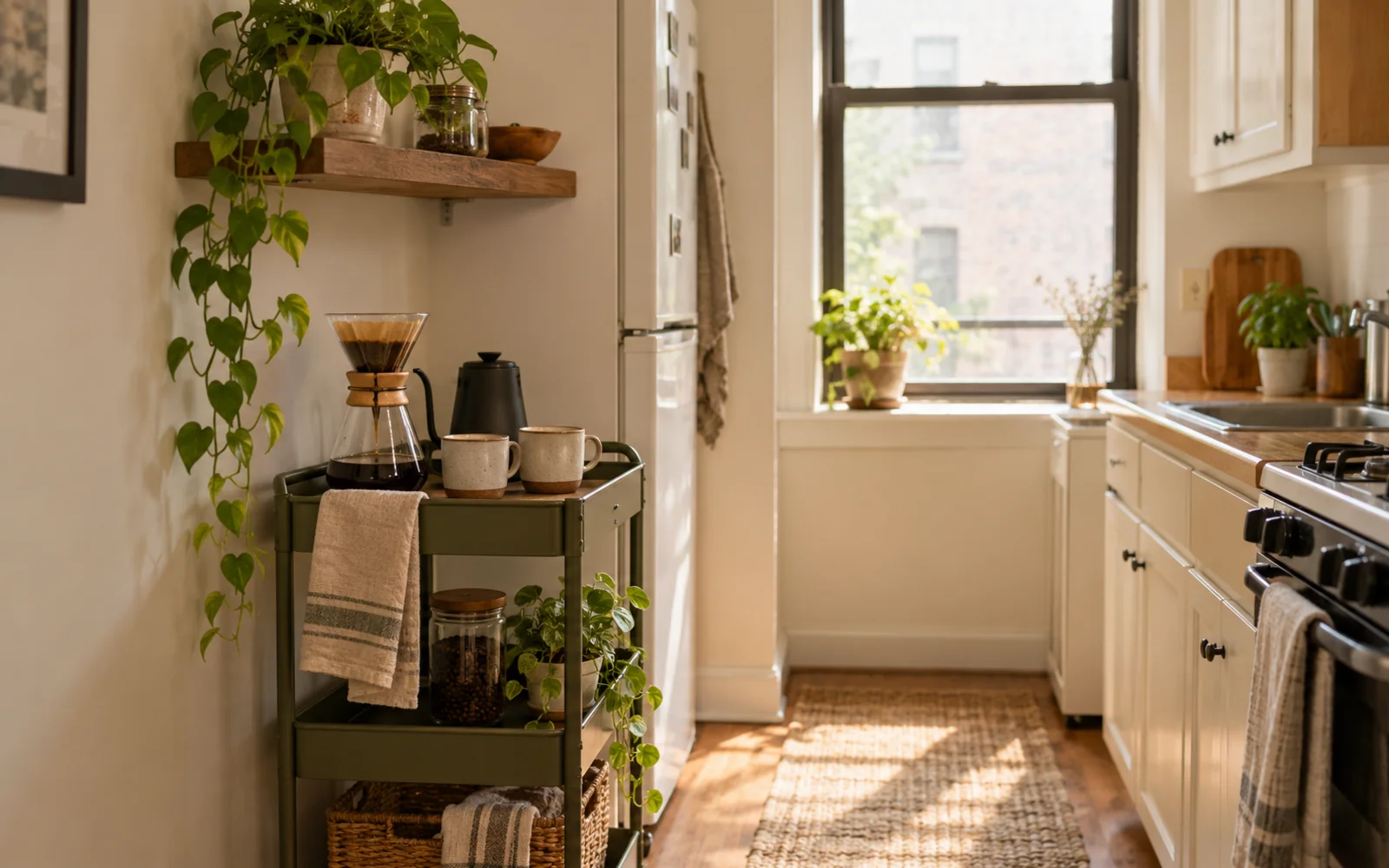
A rental can still have a comfortable coffee corner. You do not need built-in cabinetry, permanent shelves or a wall full of hooks. The most flexible setups use furniture and storage you can remove, repurpose or take to the next home.
Before making any change, read your lease and ask the property manager when the rules are unclear. “Removable” products can still affect paint, finishes and cabinet surfaces, so test carefully and follow their instructions.
Disclosure: This post may contain affiliate links. If you buy through one of these links, we may earn a commission at no extra cost to you.
1. Claim one section of the existing counter
The simplest rental coffee bar may already be in the kitchen. Choose one section near a suitable outlet and define it with a tray. Keep the brewer and daily supplies within that boundary, then leave the rest of the counter available for cooking.
A tray does not add storage, but it prevents small objects from spreading. It also makes the area easier to clear when you move or need the full counter.
2. Use a freestanding cart
A narrow cart creates a separate station without attaching anything to the wall. Look for a stable top, enough room for the appliance and shelves that fit your actual supplies. Place heavier items low and lock the wheels when the cart is in use.
Measure the room and the machine before choosing a cart. Our guide to choosing a narrow coffee cart covers the dimensions and clearance details to check.
3. Repurpose a small cabinet or console
A freestanding cabinet can provide a work surface and hide backup supplies. This works well on an open dining-room wall or at the end of the kitchen when counter space is limited.
Follow the furniture maker’s stability and anti-tip instructions. Some pieces still require anchoring, so check that requirement before buying if wall attachment is not permitted in your rental.
4. Use the shelves you already have
Move a small group of mugs, coffee and filters onto one existing cabinet shelf. An under-shelf basket may add a second level without drilling, provided it fits the shelf and does not stop the door from closing.
Avoid overloading cabinet shelves or clip-on storage. Follow the organizer’s weight guidance and keep breakable items in a secure position.
5. Store mugs on a freestanding rack
A mug tree or countertop rack can move everyday mugs out of a crowded cabinet without adding wall hooks. Choose a base that remains stable when only one side is loaded.
Set a limit based on the rack capacity. The coffee bar needs the mugs used during a normal week, not the entire collection. More options are included in Mug Storage Ideas for Small Kitchens.
6. Choose removable organizers carefully
Adhesive hooks and removable strips can be useful for very light items, but “damage-free” is not a promise for every paint, tile or wood finish. Check surface compatibility, preparation steps, weight limits and removal instructions. Test in an inconspicuous place when appropriate.
Do not use removable hardware to support hot appliances, heavy mugs or glass containers. If a failure could cause injury or damage, choose a freestanding solution instead.
7. Hide supplies inside portable containers
Use a handled bin or basket for filters, unopened coffee and small accessories. The entire group can move from a cabinet to the station when needed, then return out of sight.
One broad category is usually enough. Too many labeled containers can turn a small rental into a storage project rather than a simpler routine.
8. Create atmosphere with movable details
A small framed print placed on the counter, a washable runner or two favorite mugs can give the station personality without changing the walls. Use objects you already own before buying themed décor.
Keep fabric, paper and decorations away from heat, steam and water. The area still needs to work as a practical drink-preparation surface.
9. Protect the original surfaces
Use only surface protection that is suitable for the furniture, counter and appliance. Wipe water promptly, keep hot items on approved surfaces and clean spills according to the finish maker’s guidance.
If a machine vibrates or produces steam, leave the required clearance and check the area regularly. Protecting the rental is easier when the station is not packed tightly.
10. Design the setup to move
A rental-friendly system should pack into a few clear groups: appliance, daily supplies, mugs and backup storage. Avoid organizers that fit only one unusual corner unless they solve a problem you expect to have in the next home as well.
Before adding an item, ask whether it can serve another purpose. A simple tray may later organize cooking oils, a cart may become pantry storage and a basket may move to a closet.
A no-drill starter setup
Begin with:
- One existing counter section or freestanding surface
- One brewer and the space needed to refill it
- One tray for daily supplies
- Two everyday mugs
- One portable bin for backups
Use this setup for a week. If mugs, filters or syrups repeatedly get in the way, add one solution for that specific problem.
For more non-permanent storage options, see Coffee Bar Storage Ideas Without More Counter Space. If you want a warmer café feeling, read How to Create a Home Café in a Small Apartment.
Optional shopping guide
Products to compare
These options match the practical needs discussed above. Measure your space and review the current Amazon listing before deciding.
Paid links. As an Amazon Associate I earn from qualifying purchases.
Why it may fit
Yamazaki Home Tower Rolling Slim Storage Cart
A slim rolling option to compare when floor space matters. Confirm the listed dimensions and shelf clearance against your setup.
Why it may fit
Simple Houseware Under-Shelf Basket
An under-shelf option for using cabinet airspace. Measure shelf thickness, interior clearance and door closure before ordering.
Prices and availability can change. Amazon’s current listing controls.
Final thought
A renter-friendly coffee bar is not a temporary-looking version of a built-in station. It is a flexible setup designed around real limits. Use one movable surface, contain the daily routine and choose pieces that can adapt when the address changes.