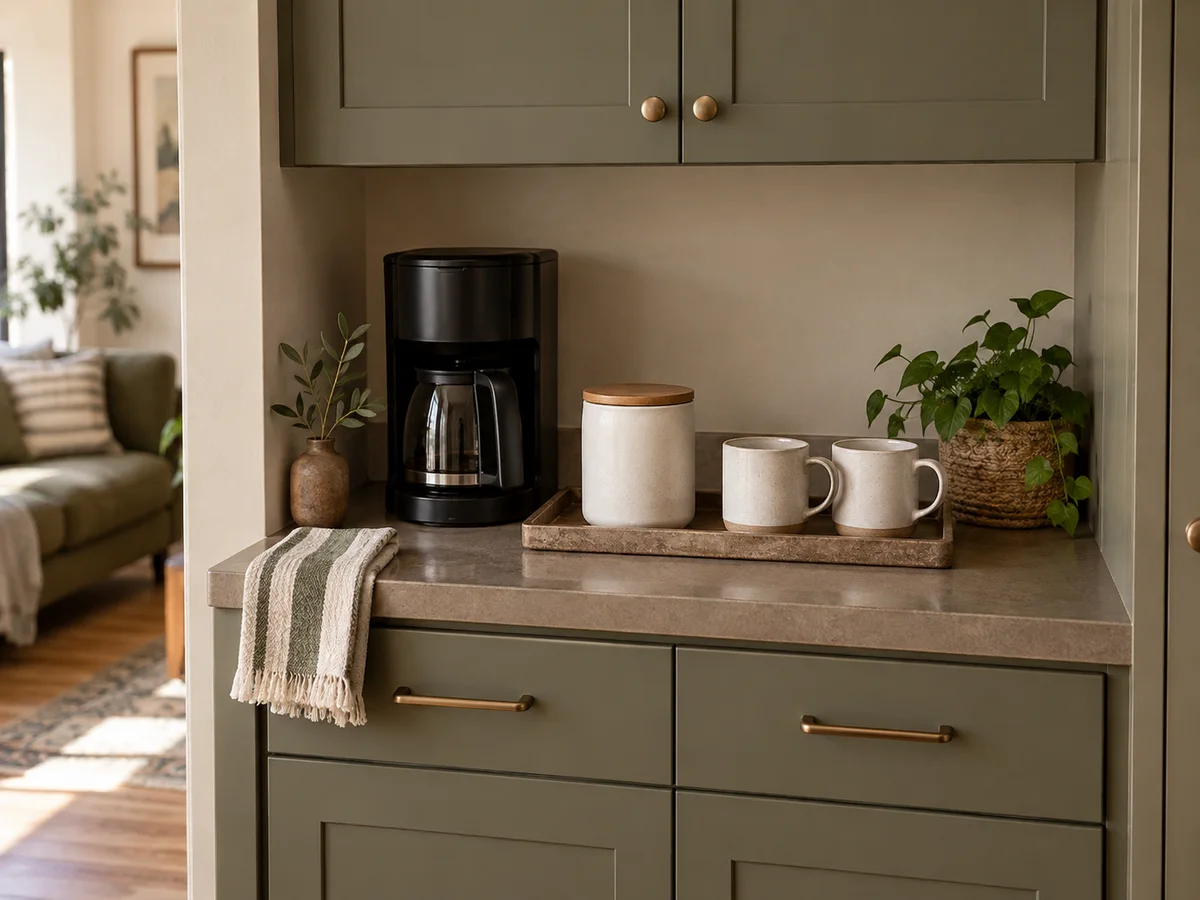
Mugs are easy to collect and surprisingly difficult to store. Their handles waste cabinet space, different shapes do not stack well and a large display can make a small coffee station feel crowded. Better mug storage begins by deciding which cups need to stay within daily reach.
The ideas below work in cabinets, on counters and around a compact coffee bar. Choose the safest option for the weight, surface and household rather than trying to display every mug.
Disclosure: This post may contain affiliate links. If you buy through one of these links, we may earn a commission at no extra cost to you.
1. Keep an everyday mug set
Choose the mugs used during a normal week and place them closest to the coffee maker. Store sentimental, seasonal or occasional pieces on a higher shelf or in another cabinet.
This is not a rule about how many mugs you may own. It is a way to keep the daily zone simple. Rotating a few favorites can provide variety without expanding the storage footprint.
2. Adjust an existing cabinet shelf
Before buying an organizer, check whether the cabinet shelf can be repositioned. Reducing empty vertical space above a row of mugs may create room for another shelf or category.
Follow the cabinet maker’s instructions and shelf-load guidance. Keep heavy mugs at a comfortable height and avoid stacking them where they may fall when the door opens.
3. Use a shelf riser
A sturdy shelf riser can divide a tall cabinet into two levels. Place similar-height mugs together and confirm that the riser feet sit securely on the shelf.
Measure the cabinet interior and the tallest mug, including the handle. Make sure the upper row can be removed without striking the cabinet frame.
4. Add an under-shelf mug rack
An under-shelf rack uses the space below a cabinet shelf and can keep handles separated. Check the shelf thickness, rack depth, hook spacing and total mug weight before choosing one.
The rack must not prevent the cabinet door from closing or let mugs hit items below. Follow the maker’s installation and weight instructions, and stop using it if it shifts or bends.
5. Try a stable mug tree
A mug tree is useful when cabinet space is limited and only a few cups need to stay on the counter. Choose a broad, stable base and check how the tree behaves when mugs are removed from one side.
Place it away from the counter edge and from areas where sleeves, bags or children could catch the handles. Limit the display to the capacity specified by the maker.
6. Use wall hooks only when appropriate
A short hook rail can turn an unused wall into mug storage, but it requires secure installation into a suitable surface. Confirm the combined weight of the mugs and follow the hardware instructions.
Renters should check lease rules before drilling. Removable hooks are generally better reserved for very light items and only on compatible surfaces. For non-permanent alternatives, see Renter-Friendly Coffee Bar Ideas Without Drilling.
7. Store mugs in a drawer with care
A deep drawer can hold mugs if they remain upright, separated and easy to lift. Use appropriate dividers or a non-slip solution recommended for the drawer and finish.
Check the drawer’s load capacity and opening clearance. Do not crowd handles so tightly that one mug must be pulled against another.
8. Use a small freestanding shelf
A compact counter shelf can place mugs above a tray or small supplies. This may work when wall shelves are not possible, but it still consumes surface depth.
Measure the full shelf and leave enough room to use the brewer. Keep breakable cups away from heat, steam and the counter edge. If the shelf does not create more usable space than it occupies, a cabinet solution may be better.
9. Avoid unsafe stacking
Stack mugs only when their shape and maker guidance allow it. Uneven rims, delicate handles and tapered bodies can make a stack unstable. Use a purpose-made organizer if you need separation rather than forcing mismatched mugs together.
A lower, secure row is better than a tall stack that must be steadied every morning.
10. Give special mugs a different home
Sentimental mugs do not have to compete with everyday cups. Display one on a secure shelf, store a small collection in a protected cabinet or rotate them into use.
Separating daily and special pieces protects the favorites while keeping the coffee station practical. It also makes it easier to see how much everyday storage is truly needed.
Choose storage by the problem
Match one solution to the actual issue:
- Too much empty space above mugs: adjust the shelf or add a riser.
- Not enough cabinet room: use an under-shelf rack if it fits safely.
- Two or three mugs need quick access: use a stable mug tree.
- The counter must stay clear: use secure cabinet or wall storage.
- A rental limits wall changes: choose freestanding or cabinet-based storage.
- The collection is simply too large for the zone: rotate mugs and store extras elsewhere.
Measure before buying and leave room for handles. Mug capacity claims are less useful than the actual spacing and weight guidance.
A simple mug reset
Keep clean everyday mugs in one assigned area. After use, return them only when clean and dry. Once a month, check whether unused cups have drifted back into the daily zone and move them to their proper storage.
For the full coffee-corner reset, read Coffee Station Organization Ideas for Small Spaces. For more vertical-storage options, visit Coffee Bar Storage Ideas Without More Counter Space.
Optional shopping guide
Products to compare
These options match the practical needs discussed above. Measure your space and review the current Amazon listing before deciding.
Paid links. As an Amazon Associate I earn from qualifying purchases.
Why it may fit
Simple Houseware Under-Shelf Basket
An under-shelf option for using cabinet airspace. Measure shelf thickness, interior clearance and door closure before ordering.
Prices and availability can change. Amazon’s current listing controls.
Final thought
Mug storage works when the cup you want is easy to reach without moving three others. Keep a small everyday set close, use height carefully and store the rest according to how often it is used. In a small kitchen, a clear limit is often the most useful organizer.