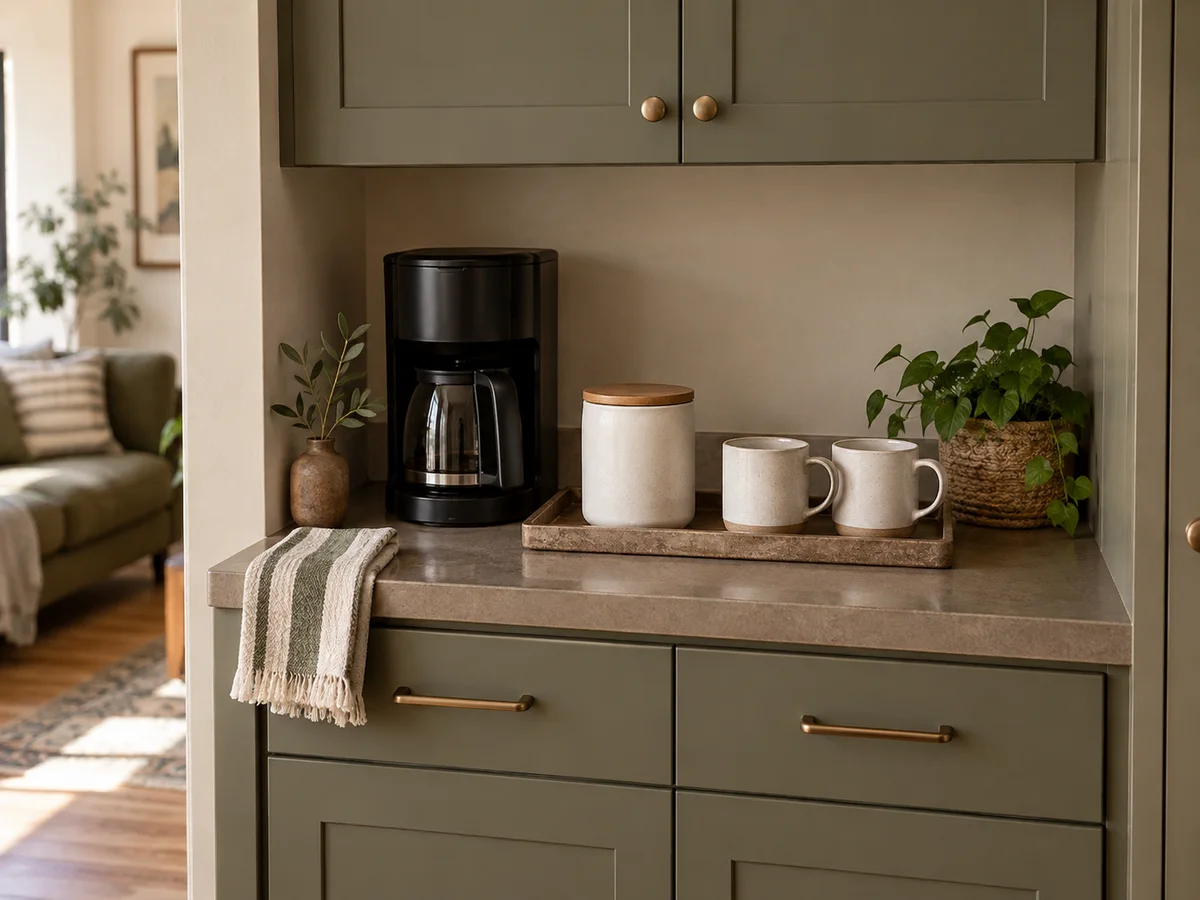
When a coffee bar feels too small, the first instinct is often to add another cabinet or use more of the kitchen counter. That solves one problem by creating another. In a compact kitchen, better coffee bar storage usually comes from using height, hidden surfaces and space away from the daily brewing zone.
These ideas add capacity without claiming more of the counter you need for cooking and serving.
Disclosure: This post may contain affiliate links. If you buy through one of these links, we may earn a commission at no extra cost to you.
1. Use the wall above the station
One well-placed shelf can hold beans, filters and lightweight mugs. Keep the items you use most often at a comfortable height and leave enough clearance above the coffee maker for steam, lids and refilling.
Follow the shelf maker’s installation and weight limits. If you rent, confirm what changes are allowed before drilling into the wall.
2. Add an under-shelf basket
An under-shelf basket can use the empty space below a cabinet shelf. It works well for light items such as filters, towels or sealed packets.
Measure the shelf thickness and the basket height before buying. Make sure the basket does not interfere with items stored below or prevent the cabinet door from closing.
3. Use the inside of a cabinet door
The inside of a cabinet door can hold a light organizer, small measuring spoons or a short list of brewing ratios. Check that the added depth will not hit shelves or stored items when the door closes.
Avoid loading the door with heavy containers. Use mounting hardware suitable for the door material and follow the manufacturer’s directions.
4. Add a narrow rolling cart
A cart adds several levels of storage without extending the main kitchen counter. Keep the brewer or frequently used items on top, daily supplies in the middle and backups below.
Measure the total depth including handles and wheels. Choose a location that preserves the walkway and does not stretch appliance cords across the room.
5. Use stackable bins inside cabinets
Deep or tall cabinets often waste vertical space. Stackable bins can separate filters, tea, cleaning supplies and backup coffee while keeping the categories easy to lift out.
Do not stack higher than you can reach safely. Place heavier items lower and label only where the contents are not obvious.
6. Store mugs vertically
Use a mug tree, shelf hooks or wall hooks to move everyday mugs off the counter. Keep the number of displayed mugs small so the station remains easy to clean.
Check the weight rating and spacing of any hook system. Handles should hang without touching nearby appliances or blocking cabinet doors.
7. Divide a drawer for small tools
A shallow drawer can hold scoops, clips, brushes and spare machine parts. A simple organizer prevents these small items from becoming a mixed pile.
Measure the drawer’s inside width, depth and height. Choose a few broad sections instead of a custom slot for every tool, which can make the system harder to maintain.
8. Move backup supplies away from the coffee bar
Not every coffee item needs to live at the point of use. Keep a small daily amount at the station and store unopened bags, extra filters and seasonal pieces in one backup bin elsewhere.
This is often the most effective no-cost storage change. It preserves the coffee bar for making drinks rather than turning it into a miniature pantry.
9. Use a compact cabinet for closed storage
If you have an unused wall, a shallow cabinet or slim console can provide a brewing surface with storage below. Closed doors reduce visual clutter and protect the daily zone from overflow.
Check furniture dimensions, stability and assembly requirements. Follow anti-tip guidance when provided, especially for taller pieces.
10. Use a tray as a storage boundary
A tray is not additional storage in the usual sense, but it prevents small items from expanding across the counter. Place the scoop, filters and sweetener inside the boundary and keep the rest of the surface clear.
If everything no longer fits, decide what should leave rather than automatically choosing a larger tray.
A storage plan that starts at zero dollars
Before buying anything, try this order:
- Remove duplicates and items not used during a normal week.
- Move backup supplies to an existing cabinet or pantry bin.
- Group daily tools on a tray you already own.
- Measure the remaining storage problem.
- Buy one solution for that exact gap.
This sequence protects both space and budget. It also gives you the measurements needed to choose an organizer that will fit.
For a complete daily system, read Coffee Station Organization Ideas for Small Spaces. For more layout options, see 15 Small Coffee Bar Ideas for Tiny Kitchens.
Optional shopping guide
Products to compare
These options match the practical needs discussed above. Measure your space and review the current Amazon listing before deciding.
Paid links. As an Amazon Associate I earn from qualifying purchases.
Why it may fit
Simple Houseware Under-Shelf Basket
An under-shelf option for using cabinet airspace. Measure shelf thickness, interior clearance and door closure before ordering.
Why it may fit
Yamazaki Home Tower Rolling Slim Storage Cart
A slim rolling option to compare when floor space matters. Confirm the listed dimensions and shelf clearance against your setup.
Prices and availability can change. Amazon’s current listing controls.
Final thought
The most useful coffee bar storage does not make the station hold everything. It keeps daily tools close, uses vertical space responsibly and sends backup items somewhere else. Protect the open counter first, then add only the storage that supports the way you actually make coffee.