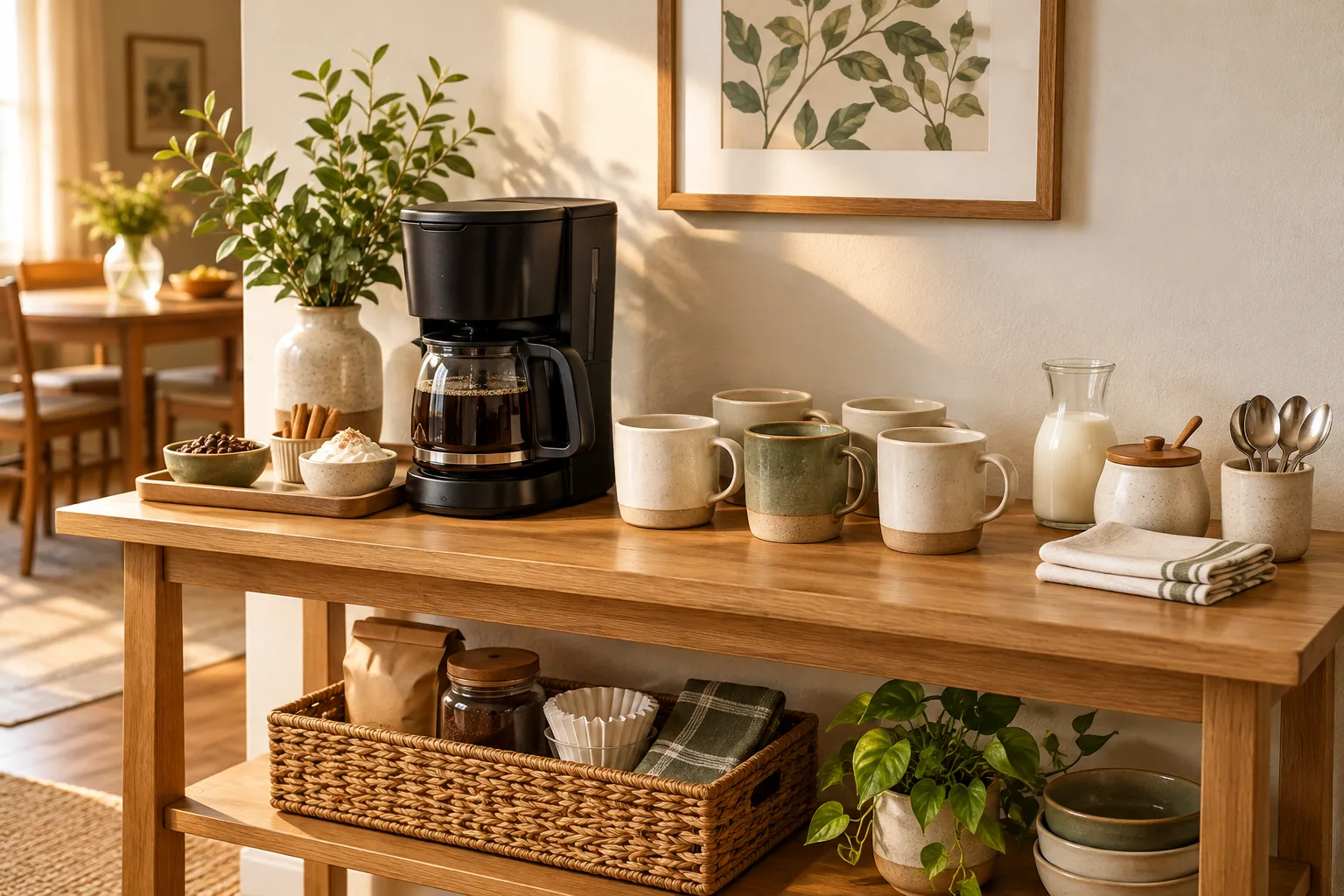
A coffee station for a small party should help guests make a drink without forming a crowd around the machine. In an apartment or compact kitchen, the main challenge is rarely decoration. It is finding room for hot coffee, mugs, milk, sweeteners, spoons and the people reaching for them.
The simplest setup uses one brewing method, a short add-in menu and a clear direction of travel. Plan the station for the gathering you are actually hosting, then keep backups close but off the serving surface.
Disclosure: This post may contain affiliate links. If you buy through one of these links, we may earn a commission at no extra cost to you.
1. Start with guest count and serving time
Count the people likely to drink coffee and decide when they will want it. Coffee served once after dinner creates a different demand from an open-house gathering where guests arrive over two hours. Ask about decaf in advance if that choice matters to the group.
Do not assume a brewer's advertised cup count equals the mugs you own. Coffee-maker cups can be smaller than a typical household mug. Compare the maker's stated capacity with the actual amount you serve, and allow for guests who may take a refill.
For four to eight guests, one prepared batch plus a realistic refill plan is often calmer than several machines. This is a planning range, not a universal quantity rule. Mug size, other drinks and the length of the gathering will change what you need.
2. Choose one familiar brewing method
A party is not the best time to introduce several appliances that require instructions. Use the brewer you know how to operate and clean. A batch drip machine usually supports self-service more easily than making every drink to order, while an espresso setup works only if someone plans to operate it.
If you are comparing a compact batch brewer, check stated capacity, exterior dimensions, lid and reservoir movement, carafe clearance and the amount of coffee your mugs hold. The OXO Brew 8-Cup Coffee Maker, for example, is currently listed by OXO with an 8-cup capacity and dimensions of 13.5 by 10.5 by 7 inches. Confirm the current Amazon listing and measure your working area before choosing it.
For a broader measurement checklist, see How to Choose a Compact Coffee Maker for a Small Kitchen.
3. Divide the station into three zones
Give each part of the routine one job. The brew zone holds the machine, carafe, filters and coffee. The serve zone holds mugs, milk, sweeteners and spoons. The refill zone holds backup mugs, coffee and napkins on a lower shelf or in a nearby cabinet.
Keep the visible station focused on the first round of drinks. Backups do not need to occupy the same surface. A small basket below the table or one labeled cabinet shelf can keep refills close without asking guests to sort through packages.
This is a temporary version of the daily-zone system in Coffee Station Organization Ideas for Small Spaces.
4. Choose the surface by its working footprint
Measure the full setup, not only the closed machine. Include the space needed to lift a lid, remove a reservoir, pull out a brew basket, hold the carafe and set down a mug. Mark the proposed footprint with paper or removable tape before moving party supplies into place.
| Situation | Practical starting point | Check before committing |
|---|---|---|
| Four guests after dinner | Existing counter and one batch brewer | Mug landing room and access to water |
| Six to eight guests over a longer visit | Counter or stable console with off-station refills | Clear approach, exit path and refill timing |
| Kitchen counter is already busy | Stable narrow cart or small side table | Appliance instructions, outlet access, cord path and load guidance |
| Several drink preferences | One coffee base with a short add-in menu | Clear labels and safe handling of perishable milk |
A movable cart can help when the kitchen is crowded, but only if its shelves, wheels and load guidance suit the equipment. How to Choose a Narrow Coffee Cart for a Small Space covers the measurements to compare.
5. Keep the hot zone outside guest traffic
Place the brewer on a stable surface away from the edge. Keep its cord out of the walkway and follow the appliance instructions for clearance, filling and serving. Do not route a cord across the path simply because the table looks better in a different location.
If children will be present, keep the hot appliance, carafe and cords outside their reach. Let one adult handle brewing and refilling. Leave decorative objects, hanging fabric and open flames out of the hot zone.
Arrange the machine so guests do not have to reach across it for sugar or milk. The drink should move away from the brewer as each step is completed.
6. Offer a short, clearly labeled add-in menu
More choices require more containers, labels and cleanup. Start with sugar, one alternative sweetener, one dairy option and one non-dairy option if your guests need it. Add one flavored syrup only when it fits the occasion.
Label dairy, non-dairy and other ingredients clearly, especially when allergies or dietary restrictions are relevant. A label helps guests identify an item, but it does not replace safe storage or prevent cross-contact. Ask guests about important needs rather than guessing.
Keep perishable milk and creamer refrigerated until serving. USDA guidance says perishable food should not remain at room temperature for more than two hours, or more than one hour when the temperature is above 90°F. Use smaller containers that can be replaced from the refrigerator, and discard items that exceed the guidance rather than topping them up.
If syrups are part of the menu, Coffee Syrup Organization Ideas for a Small Kitchen can help keep the selection contained.
7. Create one obvious direction of travel
Set the station in the order a guest uses it: mug, coffee, milk or sweetener, spoon and napkin, then exit. This prevents someone stirring a drink from blocking the next person who only needs coffee.
Place a small bowl for used spoons or wrappers at the end. If guests use disposable cups, provide a clearly visible waste or recycling location that matches local requirements. Keep food on a nearby surface when adding a snack tray would interrupt the coffee flow.
Do a practice walk with one mug. If you have to reverse direction, reach over the carafe or move an item twice, change the order before guests arrive.
8. Keep refills close but out of sight
Store backup mugs, filters, grounds and napkins in one refill zone. A lower shelf, cabinet or basket beside the station can work. The host should be able to reach it without entering the guest line.
Refill one category at a time rather than displaying every backup from the start. This preserves space and makes it easier to notice what is actually running low. Keep original packaging when it contains preparation, allergy or storage information you may need.
Extra mugs deserve a separate home instead of a larger serving surface. Coffee Mug Storage Ideas for Small Kitchens offers options for the everyday collection.
9. Prepare the station in three short stages
The day before, clean the brewer according to its instructions, confirm the number of mugs and choose the add-ins. Clear the serving surface instead of decorating around unrelated items. Decide where used spoons, empty packets and spills will go.
About an hour before serving, arrange the three zones, prepare labels and place backups in the refill area. Keep perishable milk refrigerated. Confirm that the carafe, brewer lid, cabinet doors and guest walkway can all move freely.
Just before coffee time, brew the first batch, set out the cold items and wipe the serving surface. Check the temperature and holding instructions for the exact brewer or carafe rather than promising coffee will remain hot for a fixed period.
10. Plan the reset before guests arrive
Keep a cloth nearby for spills and decide where used cups and spoons belong. Return perishable milk promptly and follow current food-safety guidance. Empty grounds, wash removable parts and care for the carafe according to the maker's instructions.
Put temporary labels and extra supplies into one basket so the everyday coffee station is easy to restore. Notice which items guests ignored. The next gathering may need fewer choices, not a larger setup.
Frequently asked questions
What should I put on a coffee station for a small party?
Start with one brewer, mugs, coffee, sugar, one alternative sweetener, milk or creamer, spoons and napkins. Add decaf or one syrup only when your guests are likely to use it. Keep backup supplies nearby rather than covering the serving surface.
How much coffee should I make for six to eight guests?
Estimate from the amount your actual mugs hold, the number of coffee drinkers, likely refills and how long coffee will be available. Compare that total with the brewer's stated capacity. Prepare a refill plan instead of relying on an undefined cup count.
How do I keep a party coffee station from looking cluttered?
Limit the first round to one brewing method and a short menu. Use three zones, move backup packaging below or behind the station and leave one clear landing area for a mug.
Where should I put a coffee station in a small apartment?
Use a stable counter, console or cart near a suitable outlet but outside the main cooking and walking paths. Check appliance clearance, cord reach and the full guest approach before deciding. How to Create a Home Café in a Small Apartment offers more location ideas.
How can I keep milk or creamer safe during the party?
Keep perishable products refrigerated until serving, use a small container and replace it as needed. Follow current USDA guidance and the product label. Do not keep topping up an older container, and discard perishable items that have been out too long.
Optional shopping guide
Products to compare
These options match the practical needs discussed above. Measure your space and review the current Amazon listing before deciding.
Paid links. As an Amazon Associate I earn from qualifying purchases.
Why it may fit
OXO Brew 8-Cup Coffee Maker
A drip brewer to compare for a compact home-café routine. Check the current dimensions and the clearance needed to use and refill it.
Prices and availability can change. Amazon’s current listing controls.
Final thought
A useful party coffee station is a short, understandable path rather than a display of every possible drink. Choose one familiar brewer, separate brewing from serving, keep refills nearby and give hot equipment enough room. When guests can make a cup without asking where anything is, the station is doing its job.