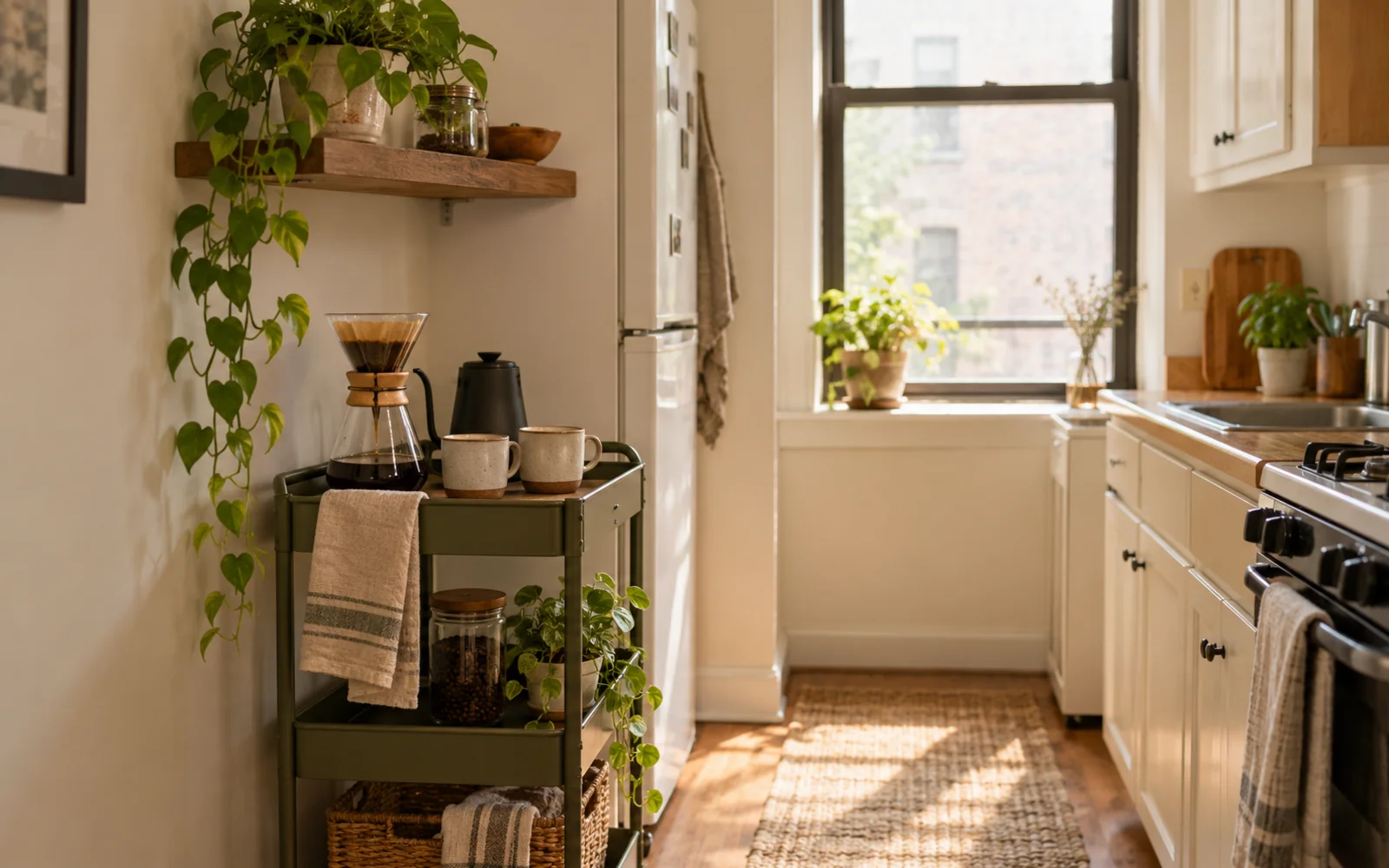
You do not need a large kitchen to create a home café. The feeling comes from a repeatable ritual: a comfortable place to make a drink, tools that are easy to reach and a few details that make the moment feel separate from the rest of the day.
In a small apartment, the most convincing home café is usually compact. It uses one zone well instead of spreading coffee equipment and décor throughout the room.
Disclosure: This post may contain affiliate links. If you buy through one of these links, we may earn a commission at no extra cost to you.
1. Choose one small zone
Look for a location close to a suitable outlet and water source. It might be a section of kitchen counter, a sturdy cart, a pantry shelf or a slim cabinet against the dining-room wall.
Measure the area and check how people move around it. Keep doors, drawers, walkways and ventilation openings clear. A home café should make the apartment easier to enjoy, not harder to use.
If you need layout inspiration, start with 15 Small Coffee Bar Ideas for Tiny Kitchens.
2. Define your usual drink routine
Write down what you make on a normal weekday. If you usually brew drip coffee, you may need a coffee maker, filters, coffee and mugs. If you make pour-over coffee, the essentials will look different. If espresso is the daily ritual, the machine and grinder will shape the layout.
Build for the drink you make most often. Equipment for occasional recipes can live elsewhere until needed.
3. Choose only the essential equipment
A small-apartment home café does not need to reproduce a commercial counter. Select the few tools that support your routine and fit the available surface.
A compact coffee maker may be enough for a simple setup. Check its exact dimensions and the clearance needed to open the lid, remove the water tank and clean the machine.
For pour-over coffee or tea, an electric kettle may earn its place because it supports more than one drink. Compare capacity and footprint as well as appearance.
4. Add a grinder only when it supports your routine
A grinder can be useful if you regularly brew whole-bean coffee, but it also adds noise, cleaning and another footprint. Decide where it will sit, where the cord will run and how grounds will be contained.
If you do not grind coffee often, keep the first version of the café simpler. Optional equipment should remain optional.
5. Add compact storage
Use one shelf, tray or small cabinet to support the café without filling every open wall. Keep daily supplies close and move backup stock out of the main zone.
A tray can group coffee, filters and sweetener. A floating shelf can hold light items above the station. Closed storage works well for colorful packages and infrequently used pieces.
6. Improve the light
Warm, comfortable light can change the mood of the area without adding more coffee equipment. If the existing kitchen light feels harsh, consider a small lamp in a safe location away from water, heat and steam.
Use lighting that is designed for the location and follow its safety instructions. A home café should still function as a real food-preparation area.
7. Add one or two café-style details
Choose details that have a practical role or personal meaning. A small framed print, a handwritten menu, a cloth napkin or two favorite cups may be enough.
For a subtle vintage coffee corner, use warm wood, a simple metal tray or one secondhand object rather than filling the station with themed signs. The effect should feel collected, not crowded.
8. Make a simple menu board
A small menu board can turn an everyday drink into a gentle ritual. List only the drinks you can actually make with the ingredients already at home. This might be coffee, iced coffee, tea and one seasonal drink.
The menu is not necessary, but it can help you enjoy what you already have instead of treating the café as a reason to buy more equipment.
9. Include a place to set down the finished drink
It is easy to use every inch of a small surface for appliances and storage. Leave one open area large enough for a mug, spoon and small plate.
This negative space is part of the design. It keeps the station functional and makes the setup feel calmer.
10. Create an end-of-day reset
Return tools, wipe the surface, deal with used grounds and refill only what you need for the next morning. Keep a small cloth and any machine-specific cleaning tool nearby, but do not let cleaning products crowd the serving area.
For a full organization routine, read Coffee Station Organization Ideas for Small Spaces.
Three small-apartment home café layouts
The counter café
Use a limited section of existing counter. Keep one appliance at the back, daily supplies on a small tray and mugs in the cabinet above. This is the simplest choice when the counter has enough room for food preparation elsewhere.
The rolling café
Use a narrow cart with the brewer on top and backup supplies below. This works when floor space is available but the built-in counter is not. Lock wheels when appropriate and follow the cart’s load guidance.
The wall café
Use a slim console with a shelf above it. This creates a distinct café zone outside the main kitchen and can provide closed storage. Measure the furniture and appliance together before buying either one.
Optional shopping guide
Products to compare
These options match the practical needs discussed above. Measure your space and review the current Amazon listing before deciding.
Paid links. As an Amazon Associate I earn from qualifying purchases.
Why it may fit
OXO Brew 8-Cup Coffee Maker
A drip brewer to compare for a compact home-café routine. Check the current dimensions and the clearance needed to use and refill it.
Prices and availability can change. Amazon’s current listing controls.
Final thought
A home café is not defined by the number of machines on display. In a small apartment, it works best as one intentional place that supports a familiar drink and a short pause in the day. Choose the routine first, give it a compact home and add atmosphere with restraint.