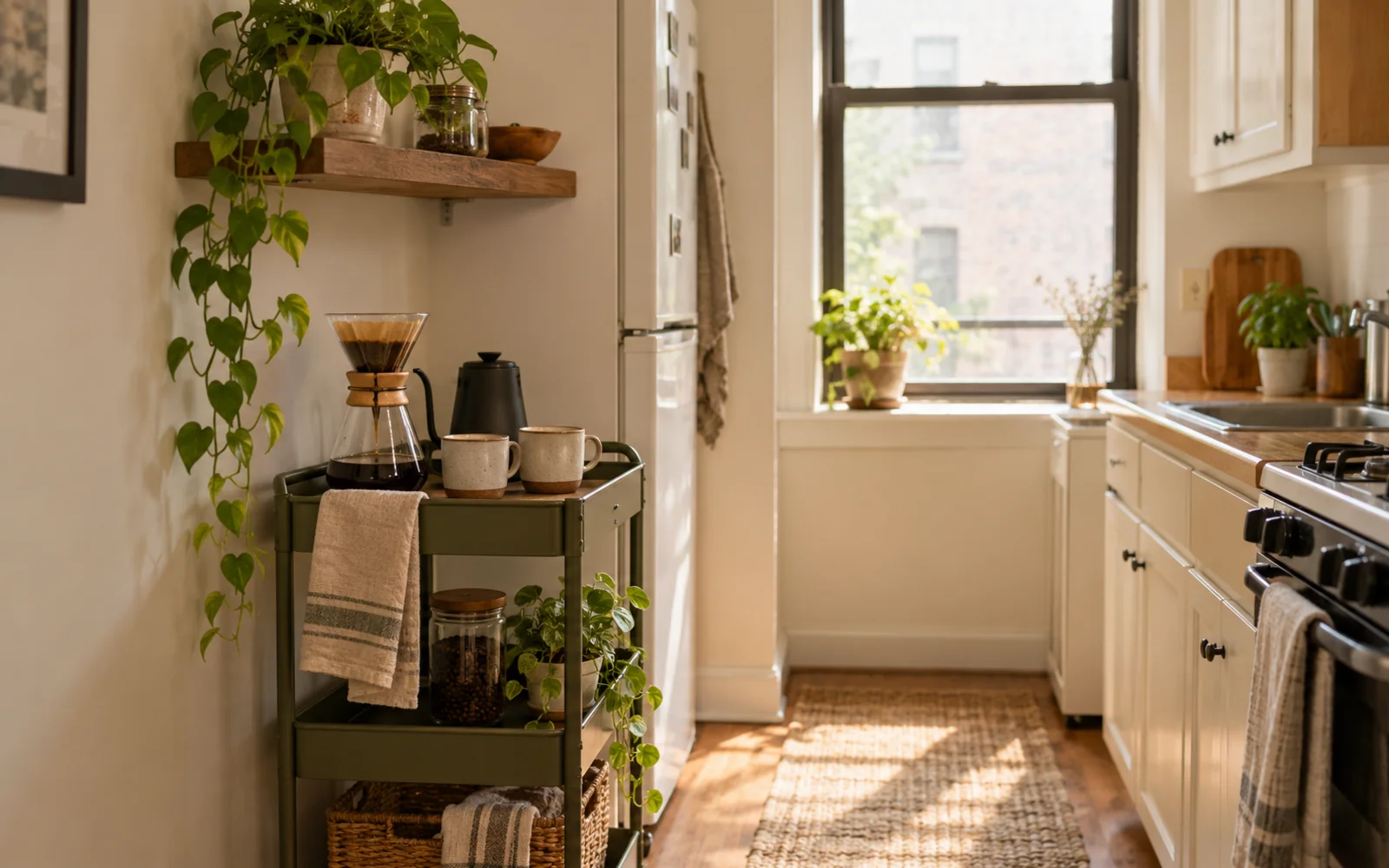
If your kitchen is short on counter space, a coffee bar may sound like something meant for a much larger home. It does not have to be. A useful coffee station can fit on a narrow cart, inside a pantry, at the end of a cabinet or in a corner that currently does very little.
The goal is not to display every mug and coffee tool you own. It is to create one small, easy-to-use zone for the drinks you make most often. These small coffee bar ideas will help you find that zone without taking over the room.
Disclosure: This post may contain affiliate links. If you buy through one of these links, we may earn a commission at no extra cost to you.
1. Turn an unused corner into a coffee zone
Start by looking for space that already exists. A kitchen corner, the end of a cabinet run or a small section of the dining area may be enough for a coffee maker and a few daily supplies.
Measure the available width, depth and outlet location before choosing furniture. A setup that fits the wall but blocks a drawer, walkway or cabinet door will quickly become frustrating.
Keep the first version simple: one machine, two mugs and one container for coffee. You can add storage only after you see what the routine actually needs.
2. Use a narrow rolling cart
A slim cart can create a coffee station when the built-in counters are already full. Wheels also make it easier to move the station for cleaning or to reposition it when guests visit.
Choose a cart by measurements, not by the word “slim” in the product name. Check the full width and depth, including handles and wheels. Look for enough clearance between shelves for the items you plan to store.
3. Add one floating shelf
The wall above a coffee maker is often more useful than adding another piece of furniture. One floating shelf can hold beans, filters or a few favorite mugs while leaving the work surface open.
Do not fill the shelf simply because space is available. Store light, frequently used items there and follow the shelf maker’s installation and weight instructions. If you rent, confirm what wall changes are allowed before drilling.
4. Store mugs vertically
Mugs can use a surprising amount of cabinet space. A small mug tree, under-shelf hooks or wall-mounted hooks can move everyday mugs into otherwise unused vertical space.
Keep only your most-used mugs at the station. Store seasonal or extra pieces elsewhere so the display still feels calm and easy to clean.
5. Keep daily tools visible
Place the items you reach for every morning within one step of the coffee maker. That may include coffee, filters, a scoop and one or two mugs.
Visibility is helpful only when the group stays small. If every tool is left out, the station becomes another crowded counter. A good test is whether you used the item during the past week.
6. Move backup supplies out of sight
The coffee bar does not need to hold the entire bag of filters, every flavor or all your unopened coffee. Keep a small working supply at the station and move backups to a pantry, cabinet or labeled bin.
This split gives the daily zone more breathing room while keeping refills easy to find.
7. Build the station on a tray
A serving tray creates a clear visual boundary around loose items. It also lets you lift several items at once when you need to wipe the surface.
Choose a tray that leaves part of the counter empty. A tray covering the full surface can make a tiny kitchen feel more crowded, even when everything technically fits.
8. Use the end of a cabinet
The outer end of a lower cabinet can support a small rail, hooks or a narrow wall organizer. This is useful for light items such as a towel, measuring spoon or reusable filter.
Avoid placing anything where it can catch on clothing or narrow the walkway. In a small kitchen, clear movement matters as much as storage capacity.
9. Create a pantry coffee station
If you have a pantry with a sturdy shelf and suitable access to power, part of it may work as a concealed coffee zone. A pantry station keeps the main kitchen visually quiet and puts beans, filters and extra supplies close together.
Check the appliance instructions for ventilation, clearance and safe use. Do not run a hot appliance in a closed cabinet or improvise electrical connections.
10. Try a slim console or cabinet
A shallow console can turn an empty wall into a coffee bar and provide closed storage below. This works especially well when you need more capacity than a cart offers but do not want to use the main kitchen counters.
Confirm the furniture depth, the height of the coffee machine and the location of the nearest outlet. If the piece is tall or can tip, follow the manufacturer’s anchoring guidance.
11. Design around the largest appliance
If an espresso machine or drip coffee maker is part of your routine, measure it first. Include the space needed to open a water tank, lift a lid, remove a drip tray and refill beans.
Once the largest appliance has a comfortable position, fit smaller tools around it. Starting with decorative storage and squeezing the machine in later usually creates an awkward workflow.
12. Add hooks for light essentials
A short hook rail can hold measuring spoons, a small towel or lightweight mugs. It uses the wall while keeping the main surface free.
Use hooks only for items that are safe at that height and weight. Keep them away from heat, steam and any place where they could be knocked loose.
13. Choose stackable storage
Stackable bins can make better use of a deep cabinet or cart shelf. Group items by purpose, such as filters, tea, cleaning supplies or backup coffee.
Label only when it makes the system easier to maintain. Clear containers may not need labels, and too many tiny categories can create more work than they save.
14. Keep the colors visually calm
Small spaces often feel more crowded when every package, mug and appliance has a competing color. You do not need to buy matching products. Start by decanting only the items you use regularly or by grouping colorful packaging inside one basket.
A limited palette of warm cream, soft taupe, muted olive and espresso brown suits the Space Made Cozy look, but function comes first. Use what you already own whenever it works.
15. Create an easy reset routine
The best small coffee bar is easy to return to normal. At the end of the day, put tools back on the tray, wipe the surface, empty grounds and refill the small working supply if needed.
The reset should take only a few minutes. If it regularly takes longer, the station may be holding too many items.
A simple small coffee bar formula
For most tiny kitchens, begin with four parts:
- One stable surface
- One main brewing appliance
- One vertical storage solution
- One container or tray for small items
Use the station for a week before adding anything else. The missing pieces will become obvious, and you will avoid buying organizers that do not solve a real problem.
For a more detailed reset system, read Coffee Station Organization Ideas for Small Spaces. If storage is the main problem, continue with Coffee Bar Storage Ideas Without More Counter Space.
Optional shopping guide
Products to compare
These options match the practical needs discussed above. Measure your space and review the current Amazon listing before deciding.
Paid links. As an Amazon Associate I earn from qualifying purchases.
Why it may fit
Yamazaki Home Tower Rolling Slim Storage Cart
A slim rolling option to compare when floor space matters. Confirm the listed dimensions and shelf clearance against your setup.
Prices and availability can change. Amazon’s current listing controls.
Final thought
A small coffee bar does not need a renovation or a large piece of furniture. It needs a clear purpose, accurate measurements and fewer items than you may expect. Start with the smallest workable setup, pay attention to how you use it and let the station grow only when your daily routine calls for it.